 800.883.8290
Getting declined for a hard money loan feels like a gut punch. You found the deal. Ran the numbers. Maybe even had a contractor lined up. Then the lender said no. After lending on properties throughout Maryland for nearly two decades and seeing thousands of applications cross my desk, I can tell you this: most declines are completely fixable. The problem is that borrowers rarely understand what actually triggered the rejection.
This article breaks down the real reasons hard money applications get declined in Maryland, the state-specific issues that trip up even experienced investors, and exactly what you need to do before reapplying. No fluff. Just the stuff that actually matters when you need capital to close a deal.
What You’ll Learn
- The 5 Most Common Reasons Hard Money Loans Get Declined
- Property Problems That Kill Deals Before They Start
- Maryland-Specific Issues: Baltimore City vs County and CHAP Districts
- ARV Miscalculations That Sink Applications
- Documentation Mistakes That Signal Amateur Hour
- How to Fix Your Application and Get Approved
The 5 Most Common Reasons Hard Money Loans Get Declined
Hard money lending operates differently than traditional bank financing. I evaluate deals based on the property first, borrower second. But that does not mean borrower factors get ignored. They absolutely matter. Here are the five reasons I see applications fail most often.
1. Not Enough Skin in the Game
This is the number one decline reason across the industry. Borrowers expect lenders to finance the entire acquisition. That is not how this works. Most hard money lenders require 20 to 30 percent down on the purchase price. When someone approaches me expecting 100 percent financing, that application goes nowhere fast.
The down payment demonstrates commitment. If you walk away from a project that goes sideways, I need to know there is enough equity in the deal to protect my position. Your money on the line keeps you motivated to see the project through. It is that simple.
2. Unclear Exit Strategy
Hard money loans are short-term instruments. Typically six to twenty-four months. I need to understand EXACTLY how you plan to repay the loan before I write the check. Vague answers like “I’ll sell it eventually” or “probably refinance at some point” signal that you have not thought this through.
For flip exits, I want to see comparable sales data showing properties like yours sold within the past 90 days at your projected price point. For BRRRR strategy exits, I need evidence you can actually refinance. That means a pre-approval letter from a conventional lender confirming the property will qualify for permanent financing after renovation.
3. Insufficient Cash Reserves
The down payment is not your only out-of-pocket expense. You need reserves to cover closing costs, to fund the first phase of renovation before draws are released, and to carry the property through unexpected delays. Most lenders want to see six months of holding costs sitting in your account.
When borrowers appear financially stretched with barely enough to close, I get nervous. Projects hit snags. Contractors find problems behind walls. Permits take longer than expected. If you have zero cushion, any complication becomes a crisis that threatens loan repayment.
4. Poor Financial History
Hard money lenders care less about credit scores than banks do. But we still look at your financial track record. Recent bankruptcies within the past five years, patterns of late payments, or previous loan defaults raise serious concerns. If you struggled to manage personal finances, I question whether you will prioritize repaying my loan.
This does not mean a rough patch in your past automatically disqualifies you. Context matters. But you need to explain what happened and demonstrate that circumstances have changed.
5. Lack of Experience
First-time investors can absolutely get hard money financing. I work with new borrowers regularly. But applications from beginners face heightened scrutiny. I look harder at project feasibility, timeline realism, and exit strategy viability when someone has never completed a flip before.
If you are new, partnering with an experienced investor significantly improves your chances. Having a mentor or business partner with a track record gives lenders confidence that someone knows what they are doing on your team.
Property Problems That Kill Deals Before They Start
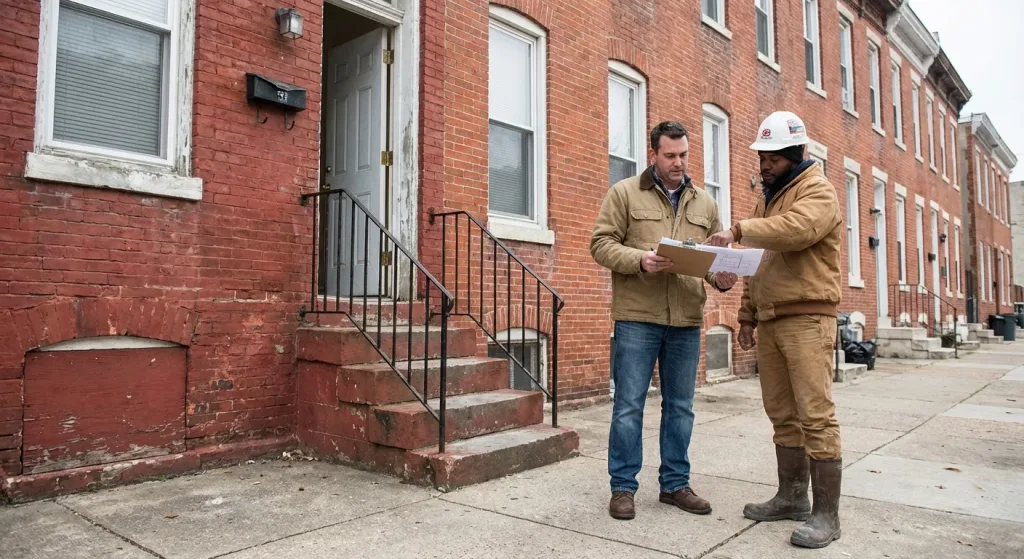
Beyond borrower qualifications, property-specific factors cause plenty of declines. Some of these issues can be resolved. Others mean you should walk away from the deal entirely.
Location Concerns
Properties in severely distressed neighborhoods where most surrounding structures sit boarded up present problems. If I have to foreclose and sell, who is buying? The recovery risk becomes too high. Similarly, rural properties far from metro areas struggle when comparable sales data proves insufficient to support valuation.
I prefer properties with multiple recent comparable sales within a quarter to half mile radius. Rural properties lacking that local market data create appraisal challenges many lenders choose to avoid entirely.
Title Issues
Clouded titles stop deals cold. Properties with unresolved liens, unreleased mortgages the seller claims were paid off, or uncertain ownership interests become problematic collateral. Tax liens carry particular concern. IRS liens maintain superior claim priority over other lienholders in most circumstances.
Before applying for financing, get a preliminary title search. Discovering title problems after submitting your application wastes everyone’s time. Work with your title company to clear defects before approaching a lender. The Maryland Land Records database allows you to research property history yourself.
Property Condition vs. Budget Mismatch
When the stated renovation budget fails to reflect realistic repair costs, applications get declined. If you quote $15,000 for a complete gut renovation when realistic costs exceed $50,000, that signals either inexperience or intentional misrepresentation. Neither is acceptable.
Professional lenders demand detailed, line-item contractor bids breaking down costs by category. Demolition. Electrical. Plumbing. HVAC. Roofing. Flooring. Finishes. Labor. Permits. And critically, a contingency reserve of 10 to 15 percent. Round number estimates or vague budget categories raise immediate red flags.
Maryland-Specific Issues: Baltimore City vs County and CHAP Districts
Maryland’s real estate landscape creates specific lending challenges that differ from national patterns. Investors who treat Baltimore as a monolithic market make mistakes that get applications declined.
The Baltimore City vs Baltimore County Distinction
This is CRITICAL. Baltimore City and Baltimore County maintain distinct market dynamics, permitting structures, and property characteristics. Comps from Baltimore City may prove unreliable for County properties and vice versa. I see applications fail when borrowers use out-of-jurisdiction comparables or ignore jurisdictional nuances affecting values.
If you are buying a property in Baltimore City, your ARV calculation should use closed sales from Baltimore City. Not Towson. Not Catonsville. Properties just across the city line can have dramatically different values. Demonstrating you understand this distinction signals sophistication to lenders. Ignoring it signals you do not know the market.
CHAP Historic Districts
The Commission for Historical and Architectural Preservation designation affects numerous Baltimore properties. CHAP-registered historic areas including Federal Hill, Canton, Fells Point, and other designated districts face renovation restrictions that complicate timelines and substantially increase costs.
When borrowers propose CHAP properties without demonstrating familiarity with CHAP approval processes, without budgeting for extended approval timelines, or without explaining how historic restrictions will be addressed, applications frequently get declined. Many lenders simply refuse CHAP financing due to complexity and timeline uncertainty.
If you are pursuing a CHAP property, your application must explicitly acknowledge the requirements. Budget an additional 30 to 60 days for approval timelines. Include the costs of historically appropriate materials. Show the lender you understand what you are getting into.
Permitting Realities
Maryland’s permitting processes take longer than many borrowers project. Experienced underwriters expect two to four week permitting delays for routine properties. CHAP properties routinely extend one to two months for approvals. Applications showing renovation timelines with minimal contingency and zero acknowledgment of permitting realities appear amateurish.
Build realistic buffers into your project schedule. Both Baltimore City and Baltimore County maintain separate permit offices with different processing times. Know which jurisdiction governs your property and plan accordingly.
ARV Miscalculations That Sink Applications
After-repair value overestimation represents the single largest lender exposure in fix-and-flip deals. This is where more applications die than anywhere else.
Cherry-Picking Comps
Borrowers motivated by profitability calculations frequently select comparables supporting their desired ARV while ignoring sales suggesting more conservative valuations. When I stress-test ARV calculations using the three most recent comparable sales with appropriate adjustments, inflated claims become obvious.
Here is a better approach. Base your ARV on the three lowest-priced active listings AND the three lowest-priced recent sales of comparable renovated properties in the immediate area. This conservative method guards against over-optimism and demonstrates professional thinking. Download our free Maryland ARV calculation template that walks through each step with built-in formulas.
The Appraisal Problem
Applications frequently pass initial screening only to encounter problems during underwriting when appraisals reveal values substantially lower than borrower estimates. An appraisal coming in 5 to 10 percent below your stated ARV can transform a properly structured loan into one exceeding lender LTV limits.
Hard money lenders typically maintain LTV limits of 60 to 75 percent on the after-repair value. Some stretch to 80 percent for qualified borrowers. If your numbers barely work at 75 percent and the appraisal comes in low, the deal falls apart. Build in margin. If your deal only works with the most optimistic possible values, it is not a good deal.
Underestimated Rehab Costs
The mirror problem of overestimated ARV is underestimated renovation costs. Borrowers frequently overlook soft costs including permit fees, inspection charges, insurance, bonding, legal fees, and contingency reserves. When actual construction costs materialize significantly above projections, projects run out of money.
Get actual contractor bids. Not estimates from your buddy who “does some work on the side.” Licensed, insured contractors who can provide itemized line-item bids. That is the standard professional lenders expect.
Documentation Mistakes That Signal Amateur Hour
Many borrowers face rejection purely due to documentation inadequacy rather than deal fundamentals. Hard money lenders pride themselves on rapid turnaround. I can close in under a week for well-prepared applications. But incomplete packages generate delays that kill deals.
What a Complete Application Includes
The following documents should be organized and ready before you apply. Missing pieces create delays and frustration for everyone involved.
- Fully executed purchase contract with purchase price and closing timeline
- Property photos showing current condition
- Detailed scope of work identifying specific renovations planned
- Line-item contractor bids from licensed contractors
- After-repair comps supporting ARV projections
- Exit strategy documentation including comparable sales data or refinance pre-approval
- Proof of funds demonstrating down payment reserves
- Recent bank statements showing available liquidity
- Entity documentation if borrowing through an LLC including operating agreement, EIN, and certificate of good standing
- Personal financial statement outlining assets and liabilities
Learn more about our lending process and what to expect during underwriting.
Communication During the Process
Poor responsiveness during the application itself generates negative perception. When borrowers respond slowly to document requests, provide vague answers to specific questions, or maintain incomplete files, lenders infer disorganization. If you struggle to provide basic project details, how will you manage a complex construction project?
Professional investors maintain organized documentation and respond promptly. This is not just about getting approved. It is about demonstrating the operational competance that successful project execution requires.
How to Fix Your Application and Get Approved
Receiving a decline is not the end. It is an opportunity to understand what went wrong and fix it. Here is the systematic approach that actually works.
Step 1: Get the Specific Rejection Reason
Under the Equal Credit Opportunity Act, lenders must provide written explanation of denial reasons if you request it. Get that adverse action letter. It identifies the specific factors that triggered rejection. Without understanding the actual reason, you waste effort addressing irrelevant issues.
Step 2: Assess Whether It Is Fixable
Some problems can be solved. Documentation issues, unclear exit strategy articulation, missing contractor bids. Correct these and reapply. Other problems are fundamental. If the property genuinely lacks equity, if the exit strategy timeline is unachievable, or if the location carries unacceptable risk, reapplying to the same lender proves futile.
Be honest with yourself. Sometimes the answer is finding a different property with stronger fundamentals. Sometimes it means increasing your personal equity injection. Sometimes it means finding a different lender whose criteria better match your situation.
Step 3: Wait Before Reapplying
Generally, wait three to six months before reapplying following denial. This allows time for demonstrated improvement if credit or reserves were the issue. It also prevents the appearance of desperation that comes from repeatedly submitting essentially the same application.
If your cash reserves proved inadequate, use that time to accumulate additional funds. Target nine to twelve months of carrying costs rather than the minimum six months. This extended buffer prevents repeated rejections.
Step 4: Consider a Different Lender
Not all hard money lenders maintain identical underwriting standards. Some accept lower credit scores. Others emphasize contractor experience. Some have particular expertise in CHAP properties or challenging neighborhoods. The lender who declined you may simply not be the right fit for your specific deal profile.
But avoid applying to numerous lenders in rapid succession. Multiple hard credit inquiries damage your credit score and signal to lenders that you face widespread rejection. NEVER shotgun applications to every lender you can find. Be strategic. Research lender criteria before applying.
Step 5: Build Your Professional Network
Successful applications benefit from having the right team in place. Engage a real estate broker familiar with investment properties who can provide realistic market analyses. Select contractors who maintain proper licensing, insurance, and verifiable references. Consider partnering with experienced investors if you lack track record.
Learn more about our Maryland hard money loans. Hard Money Bankers provides fast, flexible, and reliable financing solutions for real estate investors throughout Maryland.
Ready to Apply the Right Way?
Most hard money loan declines are entirely preventable. The borrowers who get funded consistently share certain characteristics. They present well-organized documentation. They articulate clear, realistic exit strategies. They demonstrate financial capacity beyond the minimum requirements. And they understand the specific market dynamics of their target property.
If your last application was declined, do not treat it as a failure. Treat it as feedback. Identify what went wrong. Fix it. Come back stronger. That is how successful investors operate.
When you are ready to move forward with a properly prepared application, submit your application with no cost and no obligation. I review every deal personally and can typically provide an answer within 24 hours.
The information provided here is for educational purposes only and does not constitute financial or investment advice. Always perform your own due diligence and consult with qualified professionals before making investment decisions.