 800.883.8290
The Baltimore ARV Trap: Why Your Valuation Numbers Are Killing Your Fix-and-Flip Deals
Your After-Repair Value calculation is probably wrong. I can say this with confidence after funding over 4,000 real estate deals since 2007. The single biggest reason I have to deny a loan application isn’t poor credit or lack of experience. It’s an inflated ARV that turns what could be a profitable flip into a guaranteed loss before you even pick up a hammer. In Baltimore’s hyper-local market, where values can shift dramatically from one block to the next, these valuation mistakes aren’t just costly, they’re catastrophic. I’m going to show you exactly how to calculate your ARV like a professional underwriter, avoid the mistakes that KILL deals, and understand Baltimore’s unique valuation challenges that standard formulas completely miss.
What You’ll Learn:
- The Universal ARV Mistakes That Destroy Profitability
- Baltimore’s Block-by-Block Reality That Standard Math Can’t Handle
- Why Pre-1950 Rowhomes Hide $40,000+ Budget Bombs
- The CHAP Factor and Tax Implications
- The Bulletproof ARV Method for Baltimore Deals
- Case Studies: When Bad ARV Leads to Foreclosure
The Universal ARV Mistakes That Destroy Profitability
After reviewing thousands of loan applications, I see the same valuation errors repeatedly. These mistakes transcend markets, but they’re particularly devastating in Baltimore where margins are already tight.
The Fatal Comp Selection Errors
Your comparable sales (comps) are the foundation of your ARV calculation. Get these wrong, and everything else collapses. The most dangerous mistake I see is using active listings instead of sold prices. Listing prices are fantasy. They’re what sellers hope to get. Sold prices are reality. They’re what buyers actually paid.
When an investor shows me an ARV based on three homes currently listed at $300,000, I know they haven’t done their homework. Those homes might sit on the market for months and eventually sell for $250,000. Your ARV just dropped by $50,000, and you haven’t even started renovating yet.
The second critical error is using outdated comps. In a shifting market, even a comp from three months ago could be stale. I require comps from the last 90 days, preferably the last 60. Markets change quickly, and using a six-month-old comp in today’s environment is like navigating with an outdated map.
Perhaps the most insidious mistake is what I call “cherry-picking syndrome.” You find one outlier sale in the neighborhood that went for $350,000, ignore the five others that sold for $250,000, and base your entire projection on that single high sale. This isn’t analysis; it’s wishful thinking. Professional investors know that conservative valuations based on average or below-average comps are what keep you in business.
The $50,000 Rehab That Becomes $100,000
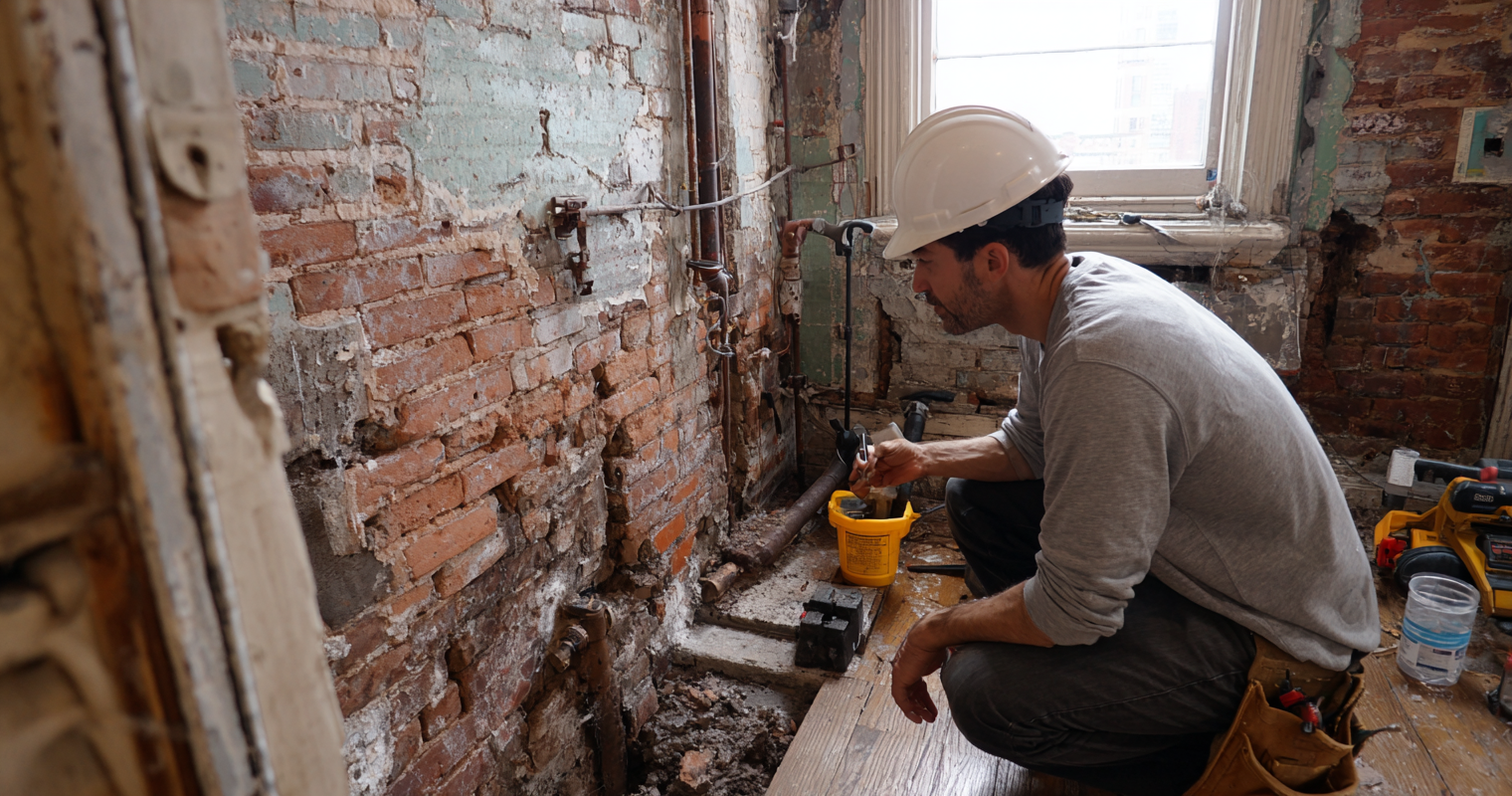
Renovation costs typically exceed initial estimates by 20-30%. After seeing thousands of projects, I can tell you this isn’t pessimism. It’s reality. That “simple” kitchen update becomes a full gut job when you discover the plumbing hasn’t been touched since 1960. The “cosmetic” bathroom refresh turns into a complete rebuild when you find mold behind the walls.
New investors consistently forget the hidden costs that don’t show up in contractor bids. Permits can add thousands. Every day your project runs late costs money in loan interest, insurance, utilities, and property taxes. Skipping a professional inspection to save $500 often costs you $10,000 or more in surprises.
Want to secure funding for your next fix-and-flip project? We can close in as little as 3 days with our streamlined process. Apply for a loan today (NO COST, NO OBLIGATION) and let’s discuss your deal.
Over-Improving Into Oblivion
Installing granite countertops and stainless steel appliances in a neighborhood where every other kitchen has laminate and white appliances doesn’t add value. It wastes money. Your ARV is capped by the neighborhood ceiling. If the best homes on the block sell for $200,000, your luxury renovation won’t magically make yours worth $250,000.
The formula isn’t Purchase Price + Renovation Cost = ARV. The formula is: What will comparable, renovated homes in this exact area sell for? That’s your ARV, regardless of what you spend.
Baltimore’s Block-by-Block Reality That Standard Math Can’t Handle
Baltimore isn’t like other markets. I’ve funded deals here for 17 years, and I can tell you that standard real estate math fails in this city. Values don’t gradually change from neighborhood to neighborhood. They can plummet or soar from one block to the next.
One street might have properties appreciating rapidly with buyers competing for every listing. Three blocks away, homes sit vacant for months. This block-by-block reality means your standard half-mile radius for pulling comps is worthless. A comp from two blocks away might as well be in a different city.
The Baltimore City government acknowledges this with their Housing Market Typology system, using statistical analysis to group census blocks by market conditions. They understand what many investors miss: this is a patchwork market where micro-location is everything. When you show me comps from across a major road or from a different section of the neighborhood, I know you don’t understand Baltimore.
Why Pre-1950 Rowhomes Hide $40,000+ Budget Bombs
The median age of a Baltimore house is approximately 94 years old. These aren’t just old homes; they’re time bombs of deferred maintenance and hidden problems. That charming brick rowhome you’re planning to flip? It probably has knob-and-tube wiring, galvanized plumbing, and structural issues that won’t reveal themselves until you start opening walls.
I’ve seen too many investors budget $40,000 for a rehab only to discover they need $80,000 or more. The electrical system needs complete replacement. The plumbing is corroded beyond repair. There’s extensive termite damage in the floor joists. Lead paint remediation adds another $10,000. These aren’t rare exceptions in Baltimore. They’re the norm.
The rowhome configuration creates additional challenges. End units often have poor insulation on the exposed wall, leading to higher utility costs that savvy buyers factor into their offers. More critically, your beautiful renovation might be physically attached to a vacant, deteriorating property. With 13,000 to 15,000 vacant properties scattered across Baltimore, there’s a real chance your flip is anchored to blight.
This vacancy problem directly impacts your ARV. A perfectly renovated rowhome attached to a boarded-up property won’t achieve the same value as one on a fully occupied block. Demolishing the adjacent vacant costs the city $35,000, but if your property shares a wall, add another $30,000 for structural support. That’s a $30,000 liability that could impact your property’s value.
The CHAP Factor and Tax Implications
Baltimore City’s property tax rate of 2.248% is substantially higher than surrounding counties. This affects you in two ways. First, it increases your holding costs during the flip. Second, it shrinks your buyer pool because their monthly payment will be significantly higher for the same sale price.
The Commission for Historical and Architectural Preservation (CHAP) creates a unique challenge. If your property falls within a CHAP district, you’re looking at both opportunity and risk. The opportunity comes from the 10-year tax credit on increased property value from rehabilitation. This can be a massive selling point that boosts your ARV.
The risk? CHAP requirements are rigid. You need pre-approval before ANY work begins, including interior demolition. All work must follow CHAP’s Design Guidelines, which typically means more expensive materials and specialized contractors. The rehabilitation must cost more than 25% of the property’s pre-rehab value. Start work without approval, and you’ve voided the tax credit and possibly subjected yourself to penalties.
Looking for funding for your Baltimore fix-and-flip project? We understand the unique challenges of this market and can help you navigate them. Submit your loan application here (NO COST, NO OBLIGATION) and let’s review your numbers together.
The Bulletproof ARV Method for Baltimore Deals
Successful Baltimore investing requires abandoning generic formulas and adopting a forensic approach to valuation. Here’s exactly how I analyze deals in this market.
Master the Block-Level Comp Analysis
Forget Zillow estimates. They’re worthless in Baltimore. Instead, go directly to the Maryland State Department of Assessments and Taxation (SDAT) database. This system allows you to search by Ward, Section, Block, and Lot. Pull sales data from the exact same block, not some arbitrary radius. If you have access to local MLS (Bright MLS) that Realtors, Appraisers etc. have access to, that is the most up to date data.
Your comps must be recent (within 90 days), proximate (same block or immediately adjacent), and similar (same configuration and finish level). Major roads and neighborhood boundaries are hard stops. Don’t cross them when selecting comps.
Make dollar adjustments for differences. If your comp has a garage and yours doesn’t, subtract that value. If you’re adding a bathroom that the comp lacks, add that value. This is how professional appraisers work, and it’s how you need to think.
Create a Detailed Scope of Work
A vague scope of work leads to a low appraisal. When you tell me “update kitchen,” I have no idea if you’re talking about painting cabinets or a complete gut job. When you specify “Install 12 linear feet of white shaker base cabinets with soft-close drawers, 20 square feet of Level 2 granite countertops, and stainless steel appliance package,” now I can justify a higher ARV.
Your scope of work needs exact measurements, specific materials, and clear deliverables organized by trade. This document serves three purposes: it gets you accurate contractor bids, it helps the appraiser justify your projected ARV, and it prevents the change orders and disputes that blow budgets.
The Baltimore-Proof Budget Formula
The standard 10% contingency doesn’t work in Baltimore. With 94-year-old homes and the probability of hidden problems, you need a 20-25% contingency minimum. This isn’t extra money you hope not to spend. It’s a required budget line item that goes into your MAO calculation from day one.
If contractor bids total $80,000, your rehab budget for calculations should be $100,000 (with a 25% contingency). Yes, this lowers your maximum offer. That’s the point. You make your money when you buy, not when you sell. A lower purchase price protects your profit when (not if) surprises arise.

Case Studies: When Bad ARV Leads to Foreclosure
Let me share what happens when investors ignore these principles. One investor rushed into a deal without accurately running comps. He started with thin profit margins, hired an inexperienced contractor, and had no contingency fund. After nine months of delays, $10,000 in overruns, and a stolen HVAC system (his insurance didn’t cover vacant properties), the lender foreclosed.
Another investor attempted a $250,000 renovation as their FIRST flip. They borrowed everything with no skin in the game, had unrealistic cost and timeline expectations, and learned the hard way that hard money payments will destroy you if your project stalls. They should have started with a simple cosmetic flip where ARV and costs are easier to predict.
Contrast this with successful Baltimore investors who understand leverage. They accurately calculate ARV, which allows lenders like me to trust their numbers. They factor in Baltimore’s unique challenges, from vacant properties to historic districts. They can preserve capital and scale operations because their fundamental math is correct from the start.
The Baltimore-Adjusted MAO Formula
Stop using the simple 70% rule. In Baltimore, you need an adjusted formula that reflects reality:
Adjusted ARV = (Block-Level Comps ARV) + (CHAP Tax Credit Value if applicable) – (Adjacent Vacancy Penalty if applicable)
Adjusted Rehab Cost = (Detailed SOW-Based Contractor Bid) + (25% Baltimore Contingency)
Maximum Allowable Offer = (Adjusted ARV × 70%) – Adjusted Rehab Cost
This formula forces you to investigate rather than guess. It accounts for the micro-market reality, the aged housing stock, and the regulatory environment that makes Baltimore unique.
Moving Forward With Confidence
Bad ARV calculations have killed more Baltimore deals than any other factor. The investors who succeed here aren’t the ones who pay the most or move the fastest. They’re the ones who understand that accurate valuation in this market requires forensic-level analysis.
You need to think block-by-block, not neighborhood-by-neighborhood. You must budget for the reality of 94-year-old homes, not the fantasy of simple cosmetic updates. You have to understand how CHAP requirements, high property taxes, and adjacent vacancies impact both your costs and your eventual sale price.
The good news is that when you get these numbers right, Baltimore offers incredible opportunities. The market rewards investors who do their homework. Properties that SEEM expensive become profitable when you understand the true ARV and costs. Deals that look impossible become feasible when you apply the right formula.
Ready to put these principles into action? We’ve funded loans of Baltimore deals and understand exactly what it takes to succeed in this market. Complete our simple loan application (NO COST, NO OBLIGATION) and let’s review your deal together. With the right numbers and the right lender, your next flip could be your most profitable yet.
Disclosure: The information provided here is for educational purposes only and does not constitute financial or investment advice. Always perform your own due diligence and consult with qualified professionals before making investment decisions.